Contents 7 Sections
Wash microfiber cloths separately from cotton and towels, using a small amount of mild detergent and no fabric softener, and air dry them or tumble dry on a low setting. The manufacturer specifies how hot you can wash them: NOBELCLEAN microfiber cloths are washable up to 95 °C. When using them: fold the cloth into four parts, wipe without pressure always in the same direction, and use a clean side after every pass.
In short:
- Folded into four parts, a cloth has eight clean sides. Wipe without pressure in one direction and take a fresh side after every pass.
- Paint, glass, rims, and the interior get their own cloths. A rim cloth never goes back onto the paint.
- Wash without fabric softener, with a small amount of mild detergent, and without cotton in the drum.
- Dry the cloths in the air or in the dryer on a low setting, store them dust-free, and sort out any hard or scratchy cloths.
Why microfiber – and what 420 g/m² means
Microfiber consists of synthetic fibers that are much finer than a human hair. Between the countless fibers of a cloth lie tiny spaces where dust, dirt, and moisture get trapped: the cloth absorbs them instead of pushing them across the paint. A cotton rag or sponge, by contrast, tends to push loosened dirt in front of it – and anything pushed across the paint can leave fine marks.
The g/m² specification, often called GSM, is the basis weight: the amount that one square meter of the fabric weighs. More weight means more fiber material on the same surface – the cloth is denser and thicker and offers more padding between the hand and the paint. The NOBELCLEAN microfiber cloths weigh in at 420 g/m² at 41 × 41 cm. Whether a cloth stays soft, however, is up to you – during use and during washing.
Folding and wiping with a microfiber cloth correctly
Folding: four parts, eight sides
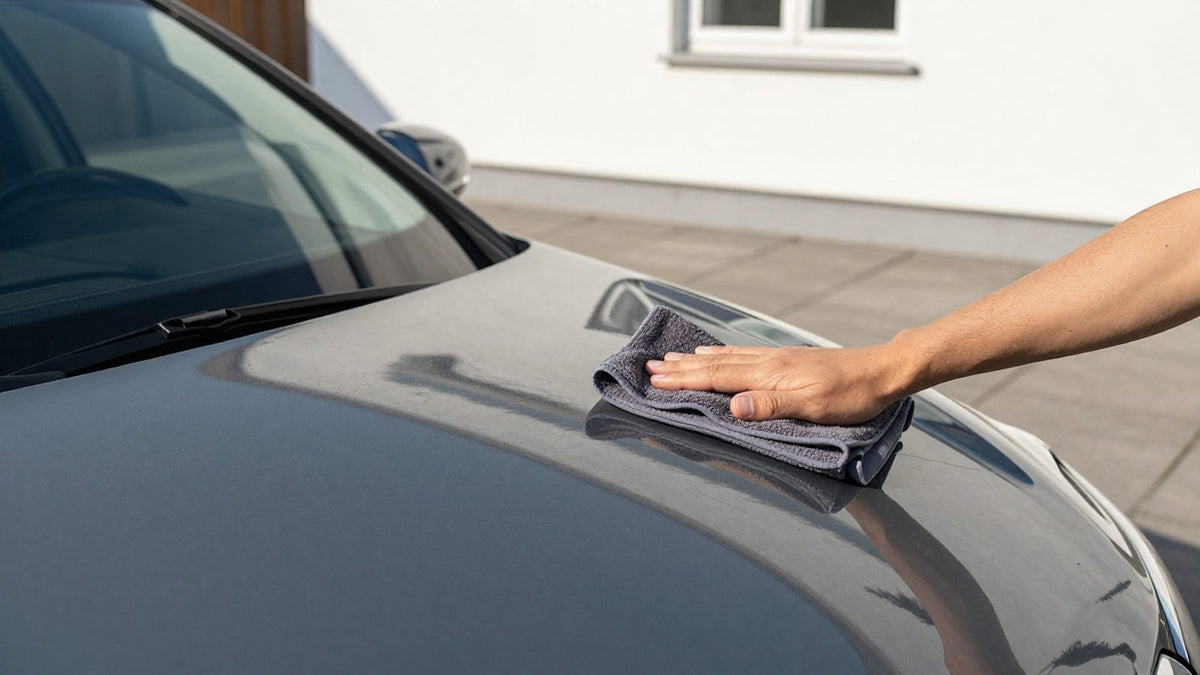
A crumpled cloth only presses against the paint at the fingertips, while the rest remains unused. Therefore, fold it once in the middle and then again. This creates a flat pad that lies evenly under the hand.
The front and back of the cloth now each consist of four quarters – eight sides in total. If one is used up, turn the pad or fold it differently so that a clean side is on the outside. Any label or thick seam should be on the inside.
Wiping: without pressure, always in one direction
- Work in the shade on cool paint, not in the scorching sun – preferably in the morning or evening.
- Rinse off coarse sand, mud, and road salt crusts beforehand. Never pull a cloth over sand.
- Place your flat hand on the pad and wipe without pressure. The fibers are intended to absorb the dirt; if you press down, you are rubbing it over the paint.
- Pull straight lines, always in the same direction, instead of wiping in circles.
- Use a clean side after every pass. If all eight are used, wash the cloth out in a bucket, wring it out, and refold it.
This is how waterless cleaning with NC1 works: spray the paint, remove impurities with the cloth, and buff. A bucket of water for washing out the cloths is sufficient – the full procedure is shown in the article Washing your car without water. For matte paint, wraps, special paints, or delicate plastics, test the procedure on an inconspicuous area first and stick to the vehicle manufacturer's instructions.
Tip: Work with two cloths: one for removing the dirt, which you rinse out in between, and a dry one for buffing. The NC1 Starter Set contains three cloths – the third remains for the windows.
Which cloth for what: separate by use
What a cloth has picked up once does not always come out completely during washing. Brake dust from rims or sand from the rocker panel area, however, have no place on the paint. That is why every area gets its own cloths.
| Use | Which cloths | What matters |
|---|---|---|
| Paint, also drying after the car wash | Your cleanest, softest cloths | Only for paint, never after contact with the ground |
| Glass and mirrors | Separate cloths only for glass | Residue from other uses can cause smearing |
| Interior, e.g., dashboard | Separate cloths for the interior | Do not use for paint or glass in between |
| Insects, tar, heavy dirt | Separate heavy-duty cloths | Wash separately from paint cloths |
| Rims | Separate cloths, preferably retired paint cloths | Never come back onto the paint |
If your cloths all look the same, separate boxes or bags for each area and marking the edges of the rim cloths with a fabric marker will help. Retired paint cloths may be downgraded to rims, but never the other way around. How to remove insect remains and tar spots is explained in the article Removing insects, tar, and rust film.
Those who separate their cloths this way will need a few more of them. The NOBELCLEAN microfiber cloths are available in 3, 5, or 10-packs; they are intended for paint, glass, mirrors, rims, and the interior and are lint-free.
Warning: Once a cloth has fallen on the ground, you do not use it for the paint again – even after shaking or washing. Sand and grit can then be deep in the fibers, and you cannot see if a wash extracts everything. From now on, it is a rim cloth.
Washing microfiber cloths: step by step
Wash the cloths after every use. The longer dirt and detergent residue dry in the fibers, the harder they are to get out again.
- Pre-rinsing: Rinse heavily soiled cloths in a bucket beforehand.
- Sorting: Paint, glass, and interior cloths can go into the machine together; wash rim and heavy-duty cloths separately from them.
- Only microfiber in the drum: no cotton, no towels. Their lint gets stuck in the fine fibers and will end up on the paint and windows the next time you wipe.
- Small amount of mild detergent, no fabric softener: Fabric softener puts a film on the fibers. This also applies to detergents with added fabric softener.
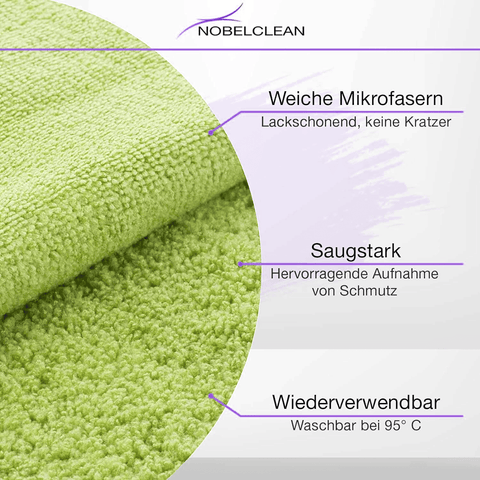
- Temperature according to manufacturer instructions: NOBELCLEAN microfiber cloths are washable up to 95 °C. For cloths from other manufacturers, their care label applies.
- Rinse thoroughly: An additional rinse cycle ensures that no detergent residue remains in the fibers.
Drying and dust-free storage
Microfiber cloths dry most gently in the air, on a drying rack, or a clothesline. The dryer is also possible, but only on a low setting: too much heat can harden the fine synthetic fibers. Skip dryer sheets, as they act like fabric softener.
Only put the cloths away when they are completely dry, otherwise, they will start to smell. Store them in a closed box or a clean bag, separated by area of use. A cloth left open on a garage shelf collects dust and sand – and brings both back to the paint the next time.
For on the go, keep a clean cloth in a sealed bag in the trunk. What you can do for your paint between two washes using it is in the article Keeping paint shiny between two washes.
Typical mistakes – and when a cloth has reached the end of its life
A microfiber cloth is only as good as its condition. These mistakes turn a good cloth into a bad one:
- Wiping with pressure or in circles
- Working with the same side for too long
- Using one cloth for rims, paint, and windows
- Just shaking out a dropped cloth and continuing
- Washing with fabric softener or together with towels
- Drying on a high setting or storing open and dusty
You can tell if a cloth is still safe for your paint by rubbing it against the back of your hand: if it feels hard, rough, or scratchy, it has been retired from paint use – even if freshly washed. The same applies to cloths with stains or discolorations that will not come out, and any cloth that has been on the floor. Such cloths are not lost; they continue working on the rims.
Frequently Asked Questions
At what temperature should you wash microfiber cloths?
The manufacturer's specification on the label or packaging is the deciding factor; NOBELCLEAN microfiber cloths are washable up to 95 °C. Just as important as the temperature: no fabric softener, little mild detergent, and no cotton in the drum.
Why no fabric softener for microfiber cloths?
Fabric softener clogs the fine spaces between the fibers where the cloth holds onto dirt and moisture. It then absorbs less, tends to push dirt in front of it, and can smear on glass – the same applies to dryer sheets.
Can microfiber cloths go in the dryer?
Yes, on a low setting, provided the care label does not say otherwise. Too much heat can harden the synthetic fibers; air drying is especially gentle.
Are microfiber cloths used dry or damp?
That depends on the step. For waterless care, you spray the paint, remove the dirt with the cloth, which you rinse out in the bucket in between, and buff with a dry, clean side or a second cloth. Wiping dry over dusty paint without spraying it first, however, should be avoided – this only rubs the dust over the surface.
My microfiber cloth has become hard – what helps?
Frequent causes are fabric softener, detergent residue, or drying at too high a temperature. Wash the cloth again with a small amount of detergent, without fabric softener, and with an additional rinse cycle, and let it air dry. If it stays hard, it only gets used on the rims.
Can I wash microfiber cloths by hand?
Yes, this is convenient when on the go, for example, on trips in a motorhome. Knead the cloths in a bucket of warm water with a little mild detergent, rinse them with clear water until no more foam comes out, and let them air dry.
Featured in this article
What you'll need

Share post