Contents 7 Sections
You can remove insects, tar, and rail dust without damaging the paintwork as long as you never work on a dry surface and never use force. Spray insect residue with a heavy-duty cleaner, let it soak for a moment, and wipe it off with a damp microfiber cloth. Remove tar splatters and rail dust spots with a cleaning clay bar, which you should glide over the wet surface without applying pressure. Finally, treat the paint with a finishing product to make it shine and ensure new dirt does not stick as easily.
In short:
- Insects: Spray on NC13, let it soak for a moment, and remove with a damp microfiber cloth.
- Tar and rail dust: Keep the surface wet with NC13 and glide the cleaning clay bar over it in straight lines without pressure.
- Don't wait: In sun and heat, residues dry on and become increasingly difficult to remove.
- Finish with NC1 – for shine and a dirt-repellent surface.
Insects, tar, or rail dust? How to identify them
All three require slightly different treatment. A look at the location, color, and surface will tell you what you are dealing with.
| Contamination | Where to find it | How to recognize it |
|---|---|---|
| Insects | Front, bumpers, headlights, side mirrors, windshield | Dried-on crusts and spots, often with wing or shell fragments |
| Tar | Behind the wheels, on side skirts and lower door edges | Small black to dark brown dots, often slightly raised |
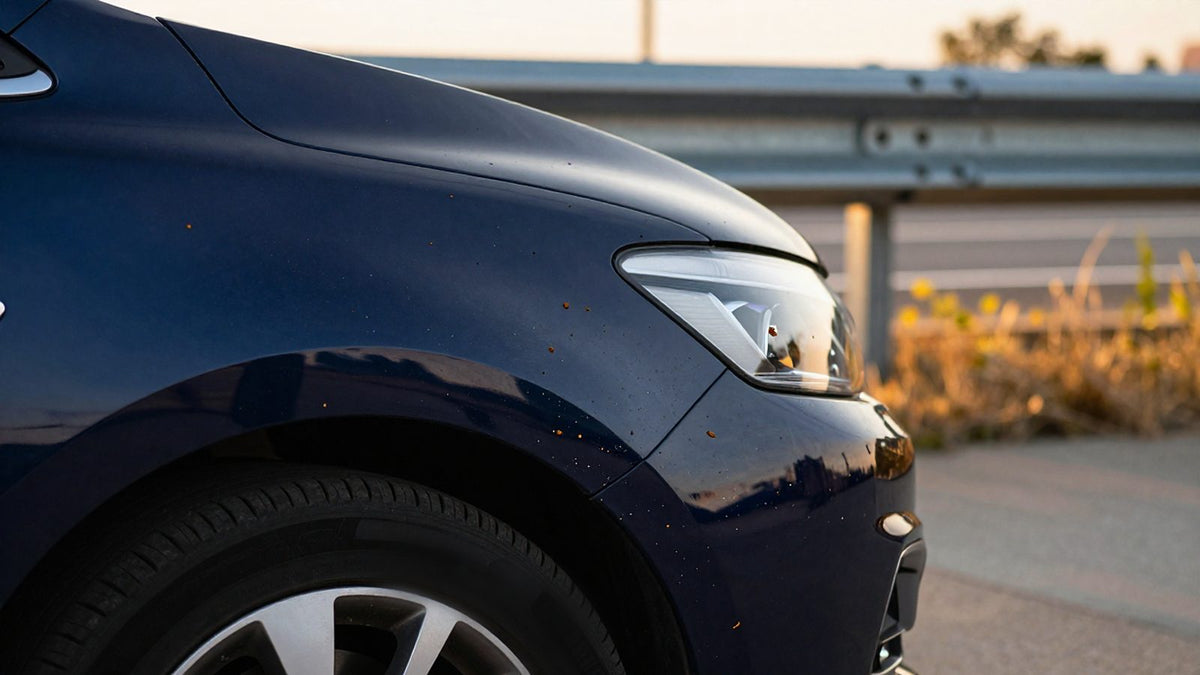
| Rail dust | Over the entire body, especially on horizontal surfaces and near the wheels | Tiny orange-brown dots, clearly visible on light paint; the surface feels rough |
Tar comes from road pavement: tires pick up softened particles and fling them onto the lower body panels. Rail dust is caused by fine metal particles, such as brake dust, that settle on the paint and begin to rust. On dark paint, you can barely see it – you are more likely to feel it.
Tip: Pull a thin plastic bag over your hand and run it loosely over the clean paint. If it feels rough instead of smooth, there are tar or rust particles present that a normal wash will not remove. Perform this feel test only on cleaned paint, otherwise you will rub dirt into it.
Why you shouldn't wait too long
Fresh insect residue is still soft and comes off easily. The longer it sits in the sun and heat, the more it dries and the firmer it adheres. Then you need more time – and you are more tempted to scrub.
If the residue remains for a long time, it can leave marks in the paint, such as dull spots that are no longer easy to wipe away. Tar also adheres more firmly the longer it sits, and rail dust can penetrate deeper into the surface over time. A quick glance at the front and side skirts after long journeys will save you a lot of work later.
Removing insects: Step by step
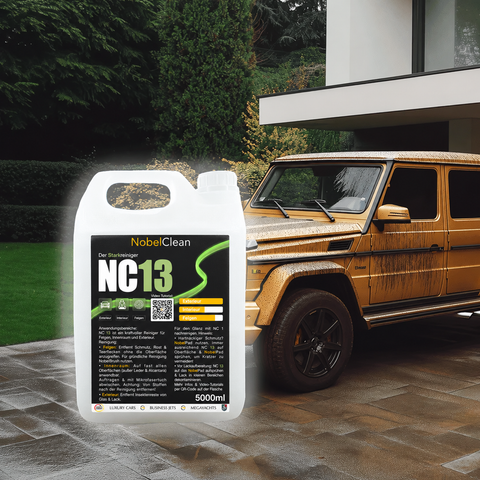
For insect residue on paint, bumpers, and mirror housings, use NC13 heavy-duty cleaner. It is intended for heavily soiled surfaces and insects. You will need a few clean microfiber cloths and a bucket of water for rinsing.
- Park the car in the shade or work in the morning or evening. On hot paint, any product will dry too quickly.
- If the front is heavily soiled, rinse off coarse sand and mud first. Never drag a cloth over sand.
- Spray NC13 onto the insect residue and let it soak for a moment – but do not let it dry.
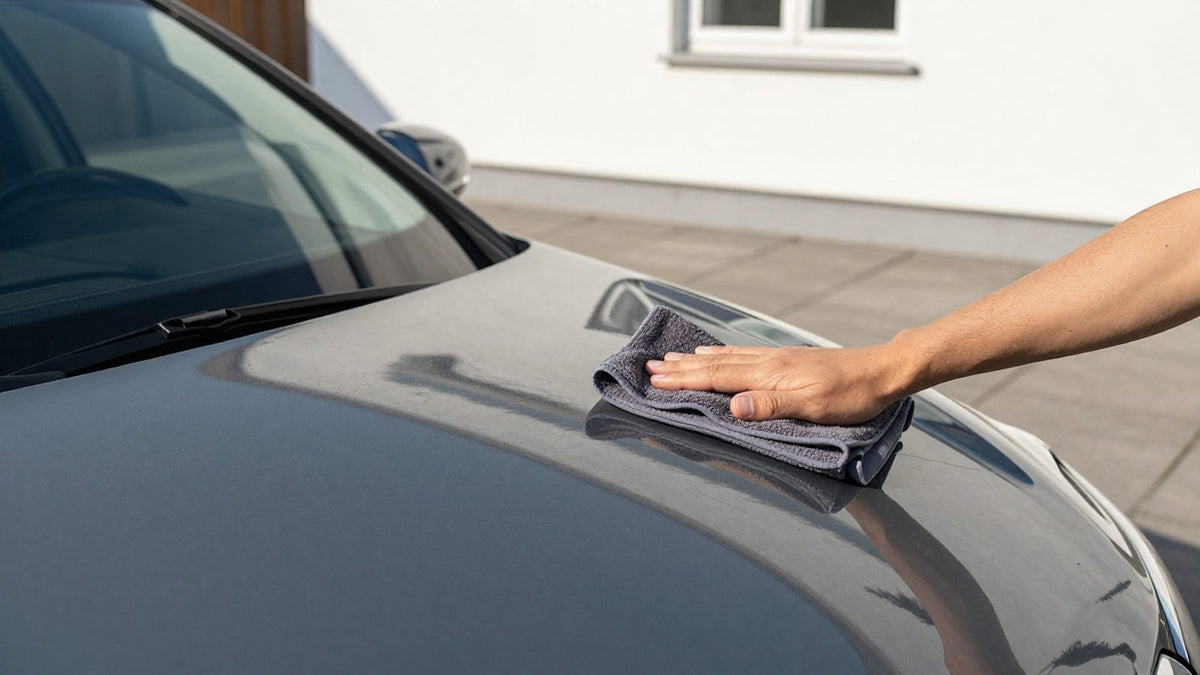
- Fold a microfiber cloth into four parts, dampen it, and wring it out well. Remove the residue in one direction and switch to a clean side of the cloth after each pass.
- If something is still stuck, spray it again and give the product more time, rather than pressing harder. Rinse the cloth in the bucket in between.
Instead of a damp cloth, you can also spray NC1 over the sprayed area and continue cleaning waterlessly. The article Washing your car without water shows you exactly how to do this.
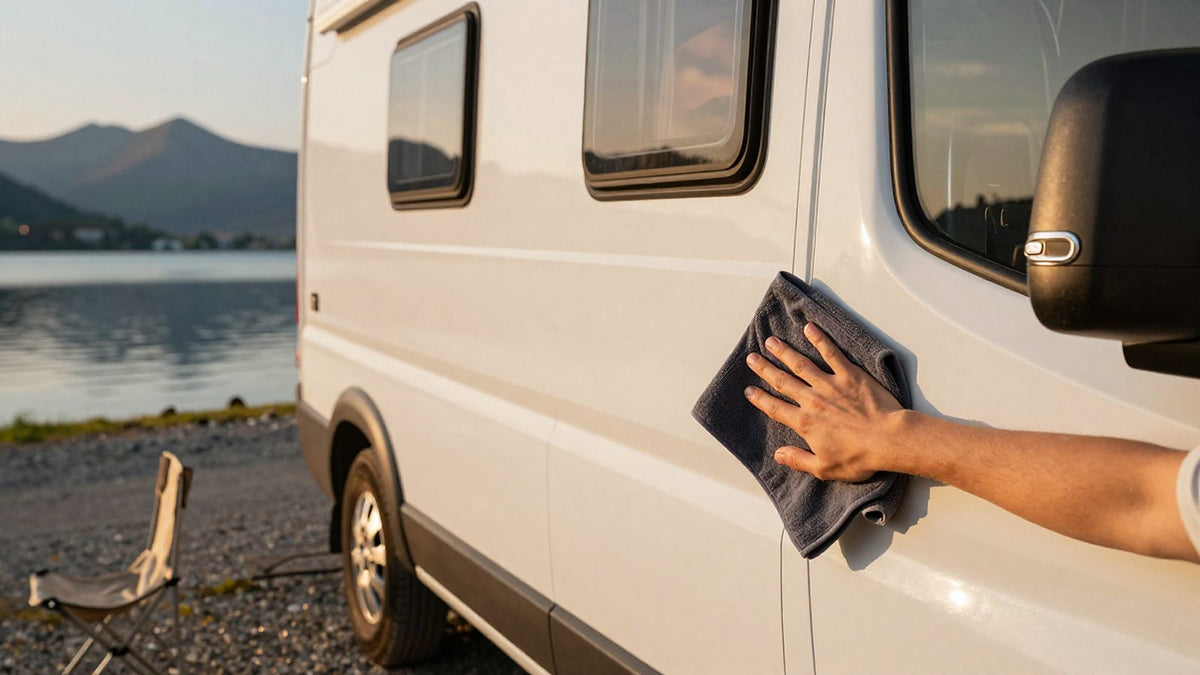
For motorhomes and caravans, the front is large and steep, so a corresponding amount of debris collects there. How to clean them on the road without a wash station can be found in the article Maintaining motorhomes and caravans on the road. Acrylic windows are sensitive: always test any product on an inconspicuous area first.
Tar and rail dust: How to use the cleaning clay correctly
Tar splatters and rail dust are more firmly embedded than insects. Here, you combine NC13 with a cleaning clay bar: it picks up the embedded particles as it glides over the wet surface. A soft, fine clay bar for car paint is sufficient to start with.
The surface must be clean beforehand, otherwise the clay will push sand over the paint. Work in the shade and in small sections as well.
- Spray the section with NC13 until it is evenly wet.
- Flatten a piece of clay, about the size of your palm.
- Glide the clay over the wet surface in straight lines without pressure. Initially, you will feel slight resistance; if it glides smoothly, the spot is clean.
- Spray again as soon as the surface begins to dry.
- Check the clay regularly. If the surface is discolored, fold it over and knead it until a clean side is on top again.
- Wipe the surface with a clean microfiber cloth and perform the feel test. If it is still rough, repeat the section.
Attention: The clay must never run dry over the paint. If it has fallen on the ground, do not use it again: it will contain sand and pebbles that will leave scratches during the next pass. Therefore, divide the clay into pieces beforehand and always work with only one.
Cleaning rims and treating paint
NC13 also helps against stubborn dirt on rims. Let rims and brakes cool down after driving, spray on NC13, and clean with a damp cloth that you use only for the rims. Brake dust and metal abrasion from this cloth have no place on the paint.
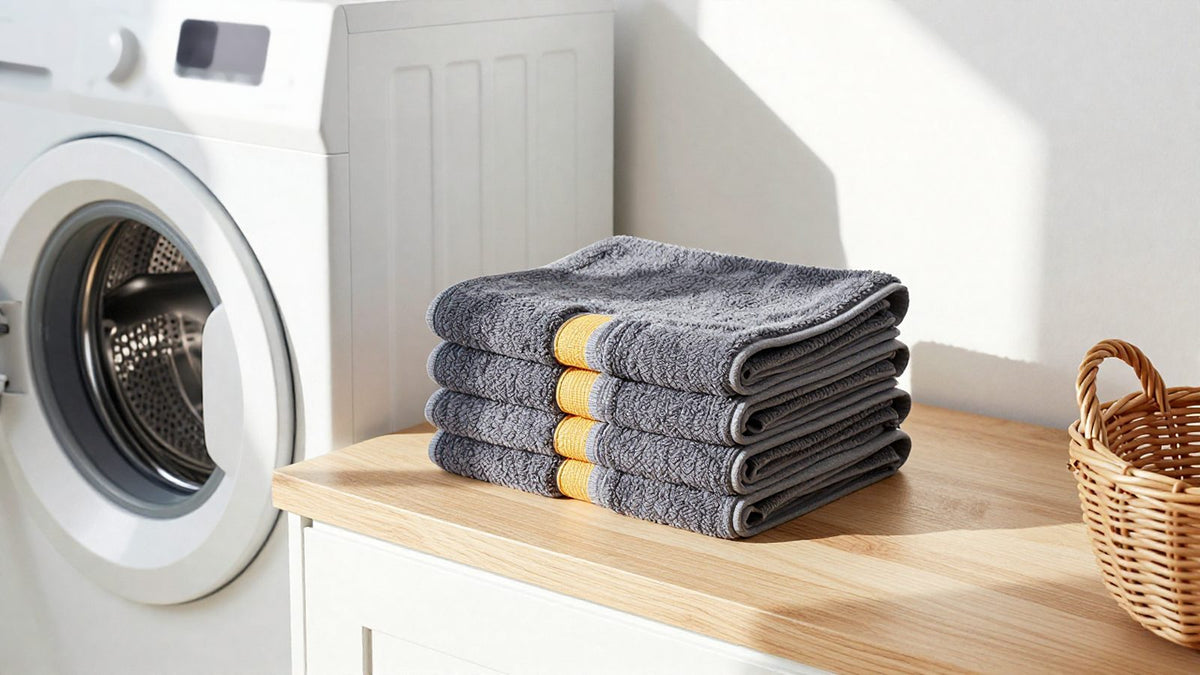
After dealing with insects, tar, or rail dust, treat the cleaned surfaces with NC1: spray on, remove with the microfiber cloth, and buff out. NC1 provides shine, is dirt-repellent, does not smear, and leaves no holograms. How to keep paint and rim cloths separate and wash them correctly is explained in Using and washing microfiber cloths correctly.
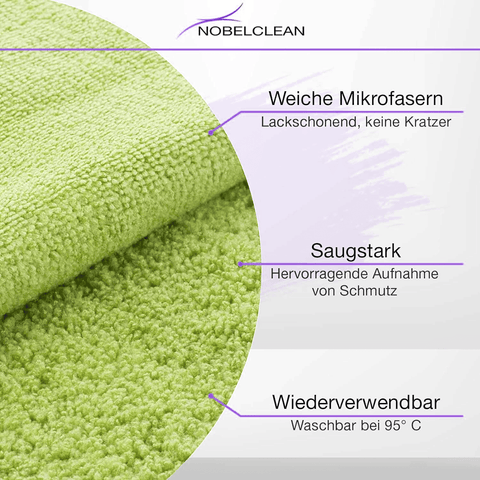
The NC1 Starter Set contains a 500 ml spray bottle, a 2.5 L refill, and three premium microfiber cloths. For rims and rough work, it is best to get additional microfiber cloths so that paint and rim cloths never get mixed up.
Typical mistakes – and when to visit the workshop
Scratches are often not caused by the dirt itself, but by the removal process. You should avoid these mistakes:
- Fingernails, scrapers, or blades: Anything you scrape off leaves marks in the paint.
- Dry rubbing: Without moisture, insect residue, sand, and rust particles act like sandpaper.
- Household cleaners and abrasives: Scouring cream, all-purpose cleaners, or the rough side of a kitchen sponge do not belong on the paint.
- One cloth for everything: Do not use rim cloths or cloths that have been on the floor on the paint.
Cleaning has its limits. If rust is not on, but in the paint – for example at stone chips, edges, or under blisters – it is no longer rail dust, but paint damage. The same applies if dull spots or edges remain after cleaning. This belongs in a professional workshop.
In case of matte paint, wrapping, special coatings, or sensitive plastics, avoid using the clay bar if in doubt. Test any product on an inconspicuous area first and follow the vehicle manufacturer's instructions.
Frequently asked questions
How do I remove dried-on insects from the car without scratching?
Soak them instead of rubbing them off: spray on NC13, let it soak for a moment, and remove with a damp microfiber cloth. For anything that does not come off on the first pass, spray it again. More pressure or a scratchy sponge will only make it worse.
How do I remove insects from the windshield?
Do not just turn on the windshield wipers – they will only smear the dry residue. Spray the residue with NC13, let it soak for a moment and remove it with a damp microfiber cloth. Then buff the windshield with NC1, which is also intended for car glass and does not smear.
What helps against tar stains – and are home remedies useful?
We recommend NC13 together with a cleaning clay bar on a wet surface, as described above. We advise against home remedies, solvents from the tool shed, and using your fingernail: you do not know how your paint will react, and scraping leaves marks. Large or old stains often require multiple passes.
Can rail dust simply be polished away?
We advise against this. A polishing compound removes paint, and the rust particles can move over the surface like abrasive grit. It is gentler to remove them with NC13 and a clay bar and then finish with NC1. For spots that cannot be removed this way, have them inspected in a professional workshop.
How often should the paint be treated with clay?
Only as needed. The clay bar is not part of regular maintenance, but is used when the paint feels rough after cleaning or you see tar and rust spots. For insects and normal road dirt, NC13 and NC1 are sufficient.
Featured in this article
What you'll need

Share post