Contents 7 Sections
To keep your car paint shiny between washes, nothing should be allowed to settle on it. Remove bird droppings, tree resin, and water spots while they are fresh; never wipe away dust and pollen while dry; and refresh the paint in between with a quick waterless treatment: spray on, lift off, polish out. Parking in the shade will save you a lot of work.
In short:
- Remove bird droppings, resin, and water droplets while they are fresh – soak dried-on spots instead of rubbing.
- Never wipe off dust and pollen while dry; rinse off sand and road salt beforehand.
- Clean in sections as you go: spray on, lift off, polish out – always in the same direction.
- Baked-on stains and scratches are jobs for a professional detailer.
What makes the shine dull
Paint shines when its surface is smooth and reflects light evenly. Even a thin film of dirt scatters the light, making the car look gray even though the paint underneath is fine. Typical causes:
- Road film made of abrasion, soot, and dust that accumulates every time you drive.
- Pollen that sticks together to form a layer with dew or rain in the spring.
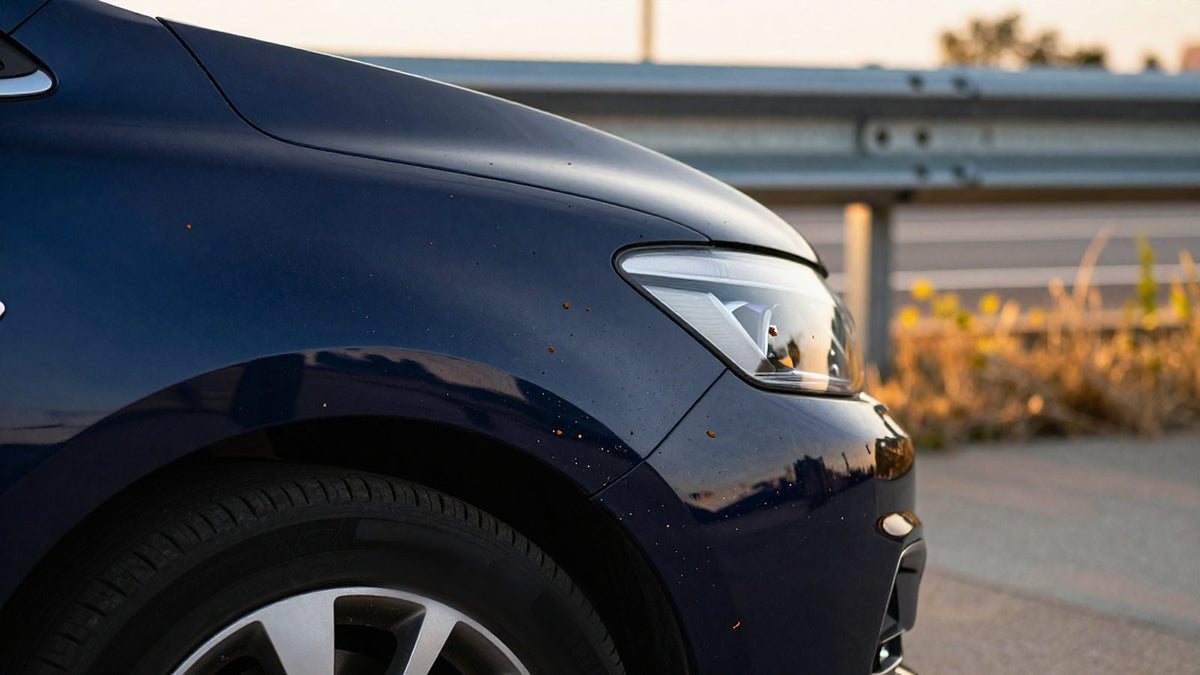
- Bird droppings, which can attack the clear coat, especially in the sun.
- Tree resin and honeydew, sticky droplets that harden in the heat.
- Dried water droplets after rain or sprinklers, which leave behind rings of limescale and dirt.
- Insect residues on the front, mirrors, and windows.
It becomes critical if these residues remain for a long time and the sun burns down on them: then they can become etched into the clear coat. This is most noticeable on black and dark paint. Dark paint also heats up more in the sun, causing dirt to dry faster.
Maintaining car paint in between: How to proceed
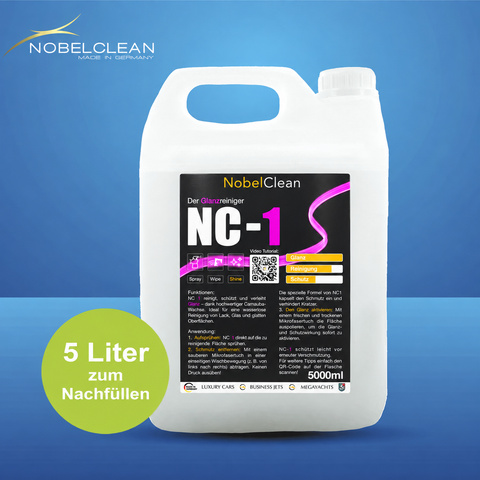
For maintenance between two washes, you don't need a garden hose or a car wash. NC1 cleans the paint without water, creates a shine, and is dirt-repellent; it does not smear and leaves no holograms. You will also need several clean microfiber cloths and a bucket of water to rinse out the cloths.
- Work in the shade or in the morning and evening when the paint is cool.
- If the car is heavily soiled, rinse off coarse sand, mud, or salt crusts beforehand – never pull a cloth over sand.
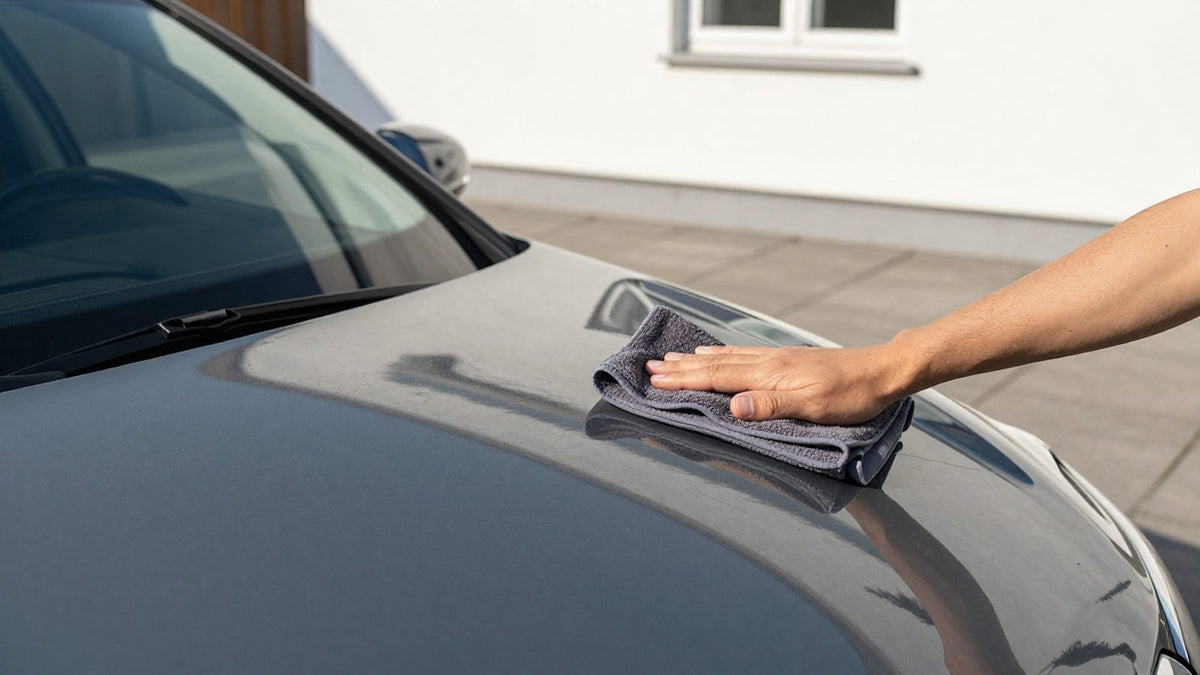
- Fold a microfiber cloth into four sections and spray a section, such as the hood, with NC1.
- Remove the contaminants without pressure, in straight lines and always in the same direction. Use a clean side of the cloth after every wipe.
- Polish the section with a second, dry cloth.
- Rinse the working cloth in the bucket and move on to the next section – from top to bottom.
One section can be done in just a few minutes; clean the windows and rims at the same time, using a separate cloth for the rims. For matte paint, vinyl wraps, or special finishes, test NC1 on an inconspicuous area first and follow the vehicle manufacturer's instructions. The complete process is shown in the guide Wash car without water.
Tip: Check the result in grazing light by holding a flashlight flat across the surface. If a haze remains, polish again with a fresh, dry part of the cloth – this check is especially worthwhile on black paint.
If you are still missing the equipment: The NC1 Starter Set contains a 500 ml spray bottle, a 2.5 L refill, and three premium microfiber cloths. Refills are available later from the NC1 5-liter refill canister.
Bird droppings, resin, water spots: act immediately
Some types of dirt cannot wait until the next maintenance session. The fresher they are, the easier they are to remove.
Removing bird droppings from the paint
Bird droppings are the most urgent case, especially in sun and heat. Never wipe them off dry: they often contain sand or seeds that act like sandpaper.
- Place a wet microfiber cloth on the spot until the droppings have softened.
- Carefully lift them off with a clean side of the cloth without rubbing.
- Spray the area with NC1, remove the residues, and polish.
Tree resin and honeydew
Honeydew, which aphids drip from trees, dissolves in water: soak, carefully remove, and maintain with NC1. Do the same for fresh resin, always without pressure. If a drop is already hard and firm, do not scratch it off with your fingernail or a blade – that is a job for a professional detailer.
Water spots after rain or sprinklers
Rain brings dust from the air, and water from sprinklers often contains limescale. If the droplets dry in the sun, they leave rings that can etch into the paint over time. Therefore, remove fresh spots before they set: spray on, lift off, polish out.
The same applies after a wash in a spray booth: dry the car with a microfiber cloth instead of letting the paint dry in the sun. And do not park within reach of a sprinkler.
Dust and pollen
Dust and pollen consist of fine grains. If you wipe them off dry, whether with your hand, your sleeve, or a duster, you risk fine scratches that will later show up as a haze in sunlight. Remove thin layers using the routine starting from the top, and spray generously so the cloth never goes over the paint dry. Rinse off thick layers and sand, such as after Sahara dust, beforehand.
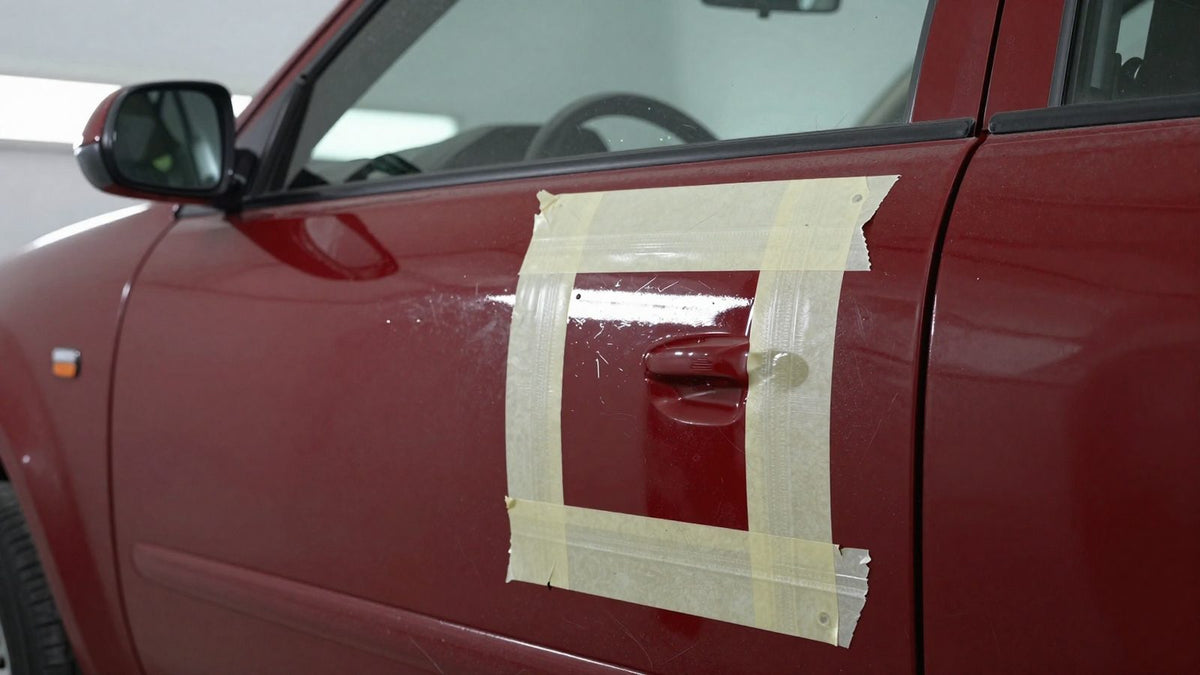
Attention: If a matte shadow or ring remains in the paint after cleaning, the stain is burned in – you cannot get it out with maintenance alone. This also applies to scratches: take them to a vehicle detailer.
Keep an eye on parking and the season
Where your car is parked helps determine how much you have to wipe away. A garage or carport is best; otherwise, find a spot in the shade. Avoid trees that produce resin or blossoms – for instance, honeydew drips under lime trees in summer – as well as lampposts and wires where birds sit. Additionally, every season brings its own challenges:
| Season | What lands on the paint | What you should do |
|---|---|---|
| Spring | Pollen and blossom dust | Never wipe dry; rinse off thick layers beforehand. |
| Summer | Insects, bird droppings, resin, scorching sun | Clean the front after long drives; only maintain in the shade. More info: Removing insects, tar, and rust film. |
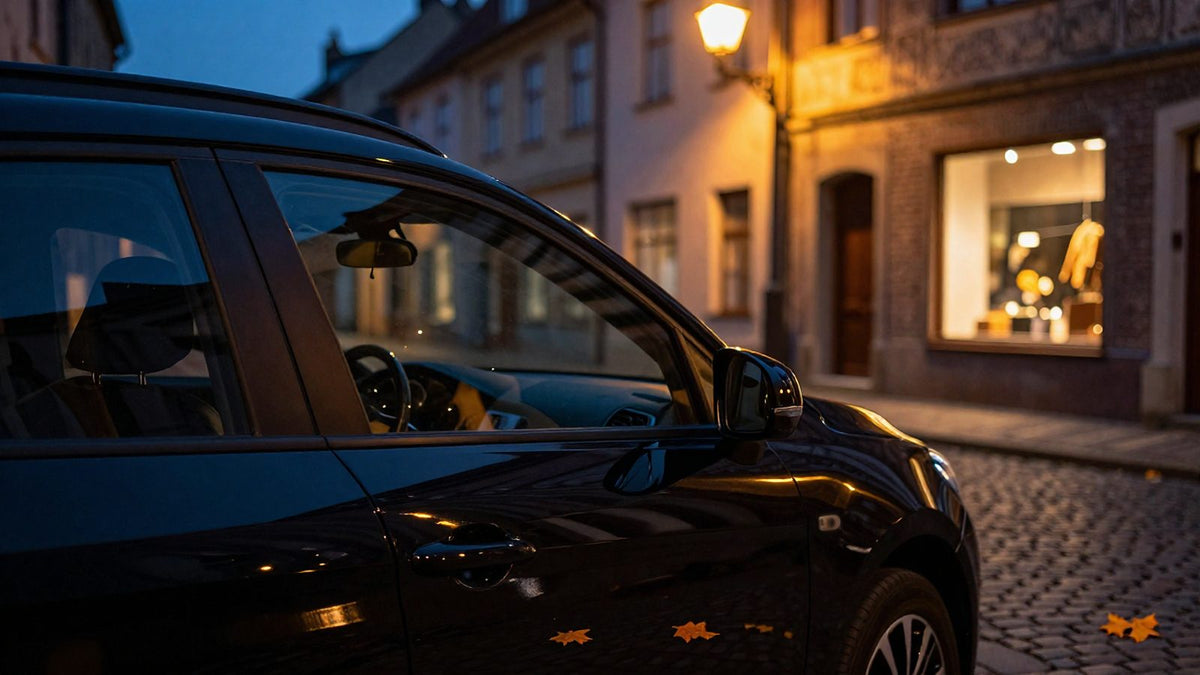
| Autumn | Wet leaves that can leave marks | Remove leaves promptly by hand; do not drag them over the paint. |
| Winter | Road salt, grit, slush | Rinse off salt crusts first, e.g., in a wash bay, before using a cloth. |
Typical mistakes that cost you shine
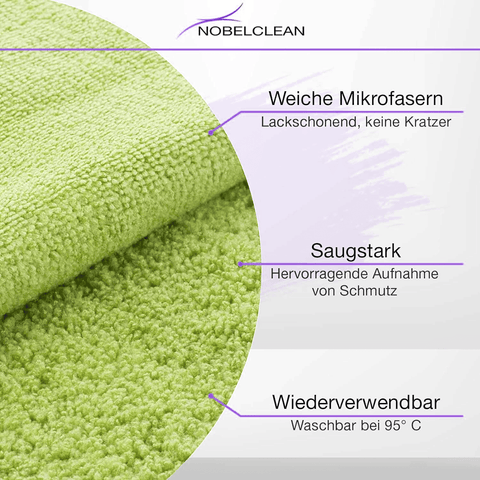
- Dusters, towels, or paper towels: They push grains across the paint or leave lint. Better to use clean, lint-free microfiber cloths from NOBELCLEAN (41 × 41 cm, 420 g/m²).
- Circular movements: They distribute the dirt, and fine swirl marks are particularly noticeable in light. Wipe in straight lines in one direction.
- Always the same cloth surface: Use a clean side after every wipe.
- Household cleaners: Dish soap, glass cleaners, or all-purpose cleaners are not made for car paint.
- Scorching sun: On hot paint, everything dries before you can wipe it clean.
- A cloth that has fallen on the ground: Do not use it on the paint again; put it straight into the laundry.
NOBELCLEAN cloths are washable up to 95 °C. How to wash them properly is explained in Using and washing microfiber cloths correctly.
Checklist for shiny paint
This is how to keep your car's shine:
- Park in the shade, not under resinous or flowering trees.
- Remove bird droppings, resin, and water droplets immediately.
- Never wipe dust and pollen dry; rinse off sand and salt beforehand.
- Maintain in sections: spray on, lift off, polish out.
- Use straight lines, one direction, and a clean cloth surface after every wipe.
- Never work in direct sun.
- Show burned-in stains and scratches to a professional detailer.
Frequently asked questions
How do I get my car paint shiny again?
Often the paint is not damaged at all, but only covered by a film of dust, pollen, and road dirt. Remove this in sections – spray on, lift off, polish out – and the shine will return. If the paint remains dull or shows scratches afterwards, only a polish by a professional detailer will help.
How long can bird droppings stay on the paint?
As short a time as possible. There is no fixed time limit, as the speed at which bird droppings attack the clear coat depends heavily on sun and heat. Soak them and remove them as soon as you discover them.
Does pollen damage car paint?
Pollen itself is soft. It becomes a problem if you wipe it dry, if sand is mixed in, or if it sticks together with dew and lies in the sun for a long time. Therefore, remove the layer regularly and never while dry.
How do I remove water spots from the car?
Remove fresh spots with the quick maintenance routine: spray on, lift off, polish out – ideally before the sun burns them in. If the edges have already etched into the paint, it is a case for a professional detailer.
How do I properly maintain black car paint?
According to the same rules, just more strictly: You will see dust, water spots, and fine scratches on dark paint first. Never wipe dry, work in straight lines in one direction, and use a clean cloth surface after every wipe. Only maintain in the shade, as dark paint heats up particularly quickly in the sun.
How often should I maintain the paint in between?
That depends on where your car is parked and how much you drive. Plan the quick round, for example, once a week, and intervene immediately in between if bird droppings, resin, or water droplets land on the paint.
Featured in this article
What you'll need

Share post