Contents 7 Sections
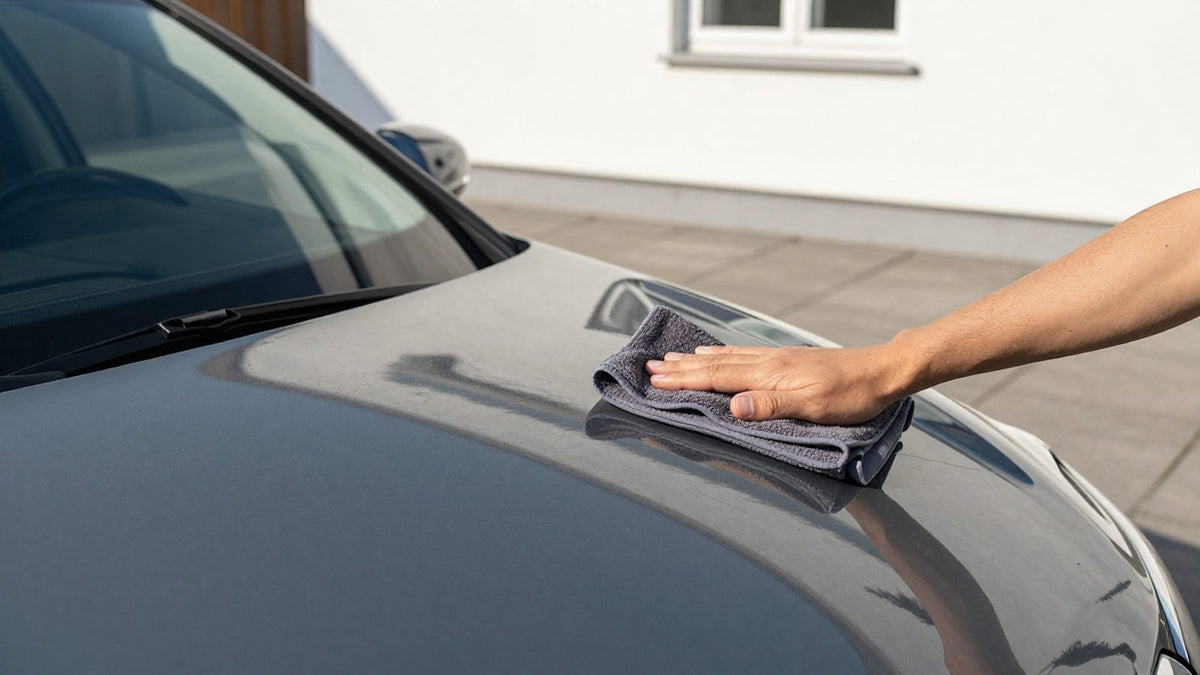
When on the road, you can clean your motorhome or caravan waterlessly and in sections: spray the surface, remove the dirt with a microfiber cloth, and buff it clean. You don't need a hose or a car wash for this – a spray bottle, enough cloths, and a bucket of water for rinsing the cloths are sufficient. Rinse off mud, sand, and road salt crusts beforehand, and check with the site operator to see if you are allowed to clean your vehicle there.
In short:
- Work waterlessly: spray, remove dirt, buff – use a clean side of the cloth after every wipe, always in the same direction.
- Order: front with insect remains first, then side walls from top to bottom, windows, doors and handles, rims last with a separate cloth.
- Acrylic windows are more sensitive than car glass: never wipe dry over dust, observe the manufacturer's care instructions, and test beforehand.
- Follow site rules and only go on the roof if the manufacturer states it is walkable.
Why a motorhome is more difficult to wash
Many car washes are built for passenger cars. With a high roof, alcove, or roof attachments, a motorhome often does not fit, and even where it does, acrylic windows, ventilation grilles, and antennas are not always designed for brushes and high pressure. What your vehicle manufacturer says about this can be found in the owner's manual.
At a parking space, you cannot simply connect a hose. What is permitted is regulated differently by cities, municipalities, and campsites – ask if in doubt, even if you are working without a water hose.
In addition, there is more surface area and different materials: painted aluminum or GRP (glass-reinforced plastic) on the walls, acrylic glass in the living area windows. Therefore, work in stages and according to the material.
This equipment belongs on board
For waterless care you need little, but enough of it:
- NC1 in the spray bottle: The NC1 starter set contains the 500 ml spray bottle, a 2.5 l refill, and three premium microfiber cloths.
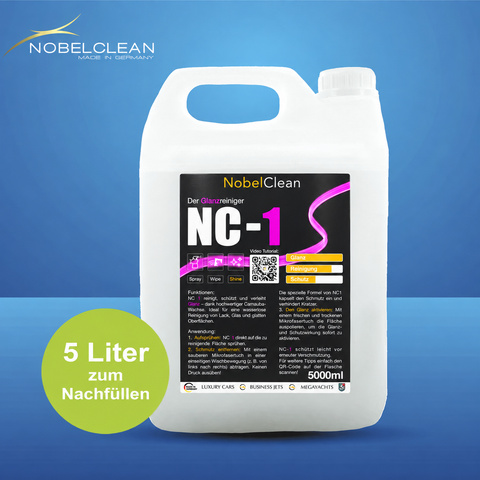
- Supplies for long trips: You can refill the spray bottle on the go from the NC1 5-liter refill canister. Stow it upright, tightly closed, and in such a way that it does not slide during the journey.
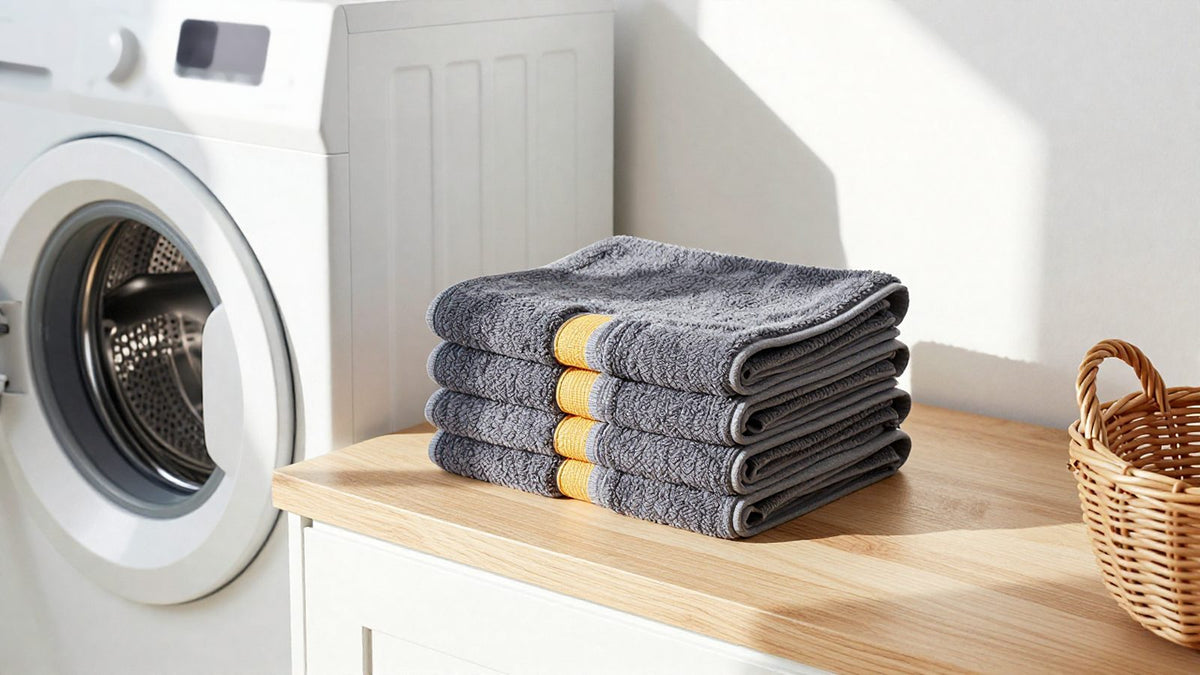
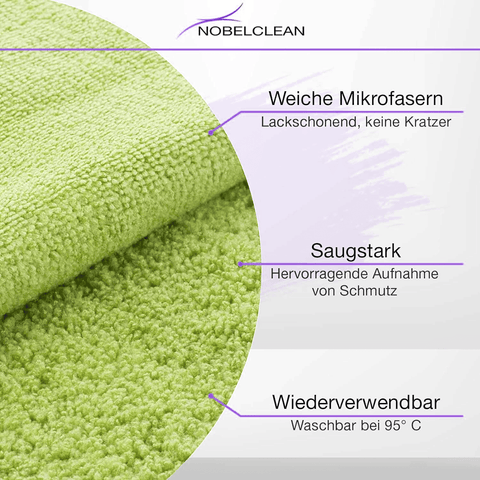
- Many microfiber cloths: Because you use a clean cloth surface after every wipe, you need significantly more cloths than you would for a car. The NOBELCLEAN microfiber cloths (41 × 41 cm) are available in 3, 5, or 10-packs.
- Bucket and bag: A bucket of water for rinsing the cloths is enough. Put used cloths in a separate bag so they don't get mixed up with the clean ones.
- A sturdy stepladder: free-standing and with wide steps, for the upper areas of the side walls. Do not lean a ladder against the bodywork to avoid scratches.
- Optional NC13 coarse cleaner for the front insect area and rims, in a separate, clearly labeled spray bottle.
Step by step: waterless in sections
Work in the shade, preferably in the morning or evening – never in direct sun and never on hot paint. Only spray as much area as you can handle in one go. The basic technique is explained in the article Washing a car without water; for a motorhome, you simply have more surface area to cover.
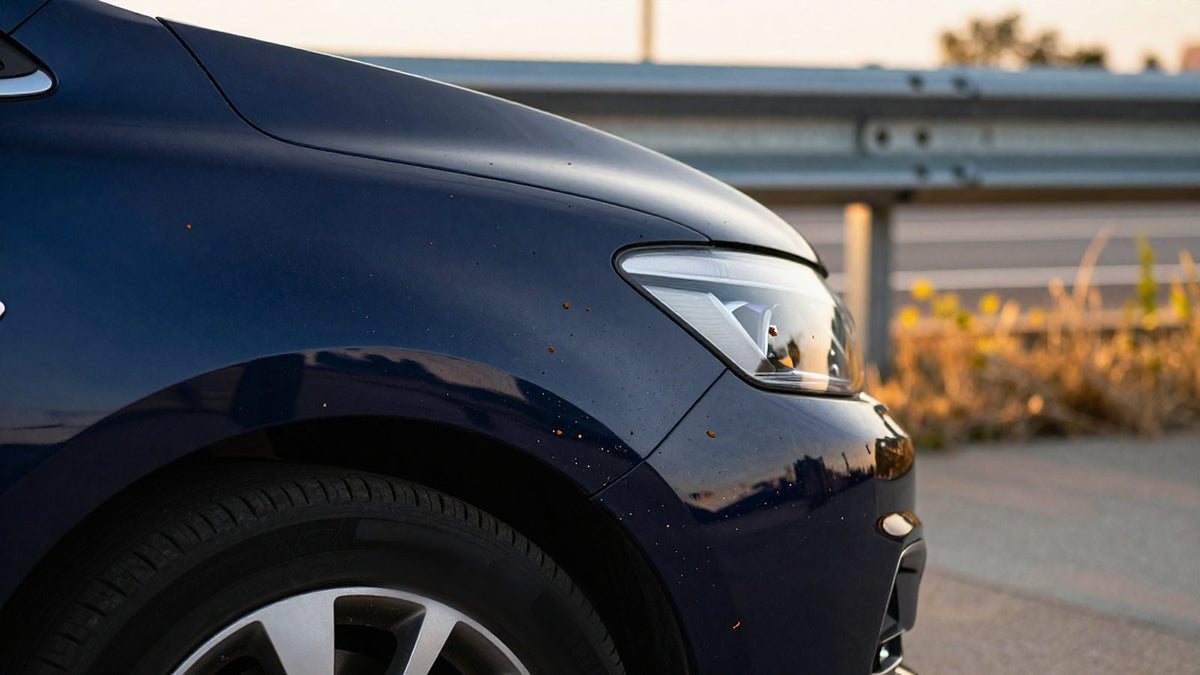
- Front first. Insect remains come off easier while they are fresh. NC13 coarse cleaner is intended for stubborn remains; follow up with NC1 – explained in detail in the article Removing insects, tar, and surface rust.
- Side walls from top to bottom. Divide each side into sections and work your way from the roof edge downwards, because the most road dirt is at the bottom. Spray, remove dirt with the cloth in one direction, buff with a dry side of the cloth; use a clean cloth surface after every wipe and rinse the cloth in the bucket in between. For dark rain streaks under windows and roof edges, it is better to approach them gently twice than once with pressure.
- Windows. The windows in the cab are car glass: NC1 is intended for this according to the manufacturer, and it does not smear. Special rules apply to living area windows made of acrylic glass, see below.
- Doors, handles, mirrors, flaps. Fingerprints and dust collect here. For small parts, spray the cloth instead of the surface.
- Rims last. According to the manufacturer, NC1 is also intended for rims. Use a separate cloth that should not be used on paint or windows afterwards.
If a cloth falls into gravel or sand, it should no longer be used on the paint, but put directly into the bag for washing.
Tip: Divide the work. One side of the vehicle each evening, and after a few days the entire motorhome is cleaned without taking up any of your holiday time.
For caravans: front and drawbar
On a caravan, insects collect primarily on the part of the front that extends beyond the towing vehicle. If your caravan has a front window, it is usually made of acrylic glass – the same applies as for the living area windows. On the drawbar, avoid the coupling and greased parts, and use a separate cloth so that no grease gets on the paint.
Acrylic glass, walls, and roof: work carefully
Acrylic windows
The windows in the living area are usually made of acrylic glass. It is softer than car glass, scratches more easily, and cannot tolerate every cleaner – many manufacturers advise against using ordinary glass cleaner, for example. Therefore, first check the care instructions of your window or vehicle manufacturer and follow them.
Rinse off dust and sand with clear water beforehand; a watering can is sufficient for this. If there is no objection in the care instructions, test NC1 on an inconspicuous corner first. Wipe without pressure using a clean, soft cloth.
Attention: Never wipe acrylic glass dry over dust or sand. The grains will leave fine scratches.
Side walls made of GRP or aluminum
Depending on the vehicle, the walls consist of painted aluminum or GRP, often with decorative foils on them. Test NC1 on an inconspicuous spot before the first large round and observe the manufacturer's care instructions. On the edges of foils, wipe away from the foil, not against the edge.
Roof only if it is walkable
Only go onto the roof if the manufacturer explicitly states that it is walkable – this is in the owner's manual. Roof hatches, solar modules, and antennas are not step areas. If the roof is not walkable, only clean what you can safely reach from the stepladder and leave the rest to a motorhome wash site.
Attention: Safety first. Never climb onto the roof or ladder in wet conditions, wind, or darkness; do not lean out to the side, and prefer to reposition the ladder more often.
Interior: cockpit and living area
In the interior, NC1 is intended for everything except upholstery fabrics according to the manufacturer. You can therefore clean the dashboard, door panels, handles, cupboard doors, and mirrors with the same product as on the outside. Spray onto the cloth instead of the surface so that nothing gets onto upholstery, curtains, or carpets.
Use separate cloths for the inside that have never been on rims or outer walls. For sensitive surfaces and the inside of acrylic windows, the same applies as on the outside: read the care instructions first, then test on an inconspicuous spot.
Routine on the road and before winter storage
You have the least amount of work if you don't let dirt sit for long. A simple routine for on the road:
- After arrival: Remove insect remains from the front and mirrors as soon as the surfaces have cooled down.
- Bird droppings immediately: spray generously and lift off with a clean cloth surface instead of rubbing.
- In between: handles, windows, and mirrors – quickly done if the spray bottle is within reach.
- Before the journey home: wipe through the interior and collect used cloths. The front is only taken care of after returning, as it will collect new insects on the way home.
Before a longer period of inactivity or winter storage, a thorough round inside and outside is worth it. Rinse off road salt or mud first at a suitable wash site; do the fine polishing afterwards with NC1. Do not park the vehicle until everything is dry, and finally wash all cloths – how to do this is in the article How to properly use and wash microfiber cloths.
Frequently asked questions
Can you wash a motorhome without water?
Yes. According to the manufacturer, NC1 cleans waterlessly and without a car wash: spray, remove dirt with a microfiber cloth, buff. Rinse off coarse dirt such as mud, sand, or road salt crusts beforehand so that you do not pull grains across the surface.
Am I allowed to wash my motorhome at the campsite?
This cannot be answered in general terms: what is permitted is regulated differently by cities, municipalities, and campsites. Ask at the reception or look at the site rules, even if you are working without a hose. Dispose of the water from your bucket where the site designates.
Can I drive the motorhome into a car wash?
Only if the facility is designed for the height and length of your vehicle. Pay attention to the specified clearance height and, if in doubt, ask the operator. What your manufacturer says about car washes can be found in the owner's manual.
What should you use to clean acrylic windows on a motorhome?
Use what the window or vehicle manufacturer approves in their care instructions. Rinse off dust and sand with clear water beforehand, and wipe without pressure using a clean, soft microfiber cloth. Test every new product on an inconspicuous corner first.
How often should you clean a motorhome?
There is no fixed rule. A simple rhythm makes sense: insect remains and bird droppings immediately, handles and windows as needed, plus a thorough round before and after the season. Those who frequently travel on dusty roads or park under trees should clean more often.
Featured in this article
What you'll need

Share post